


Ask ten operators to define digital transformation and you will get ten different answers — most of them describing a software purchase or an IT upgrade. That framing misses the point entirely.
Digital transformation is the process of redesigning how your business executes: how work moves between people and systems, how decisions get made with data, and how your operations scale without requiring proportional increases in headcount. The technology is just the infrastructure. The transformation is in how your team works.
Why most transformation initiatives stall
The most common failure mode is buying tools in isolation. A company purchases a new CRM, a marketing platform, and an analytics dashboard — then wonders why nothing changed. Without intentional workflow design, new tools add complexity instead of removing it. Teams end up managing more logins, more disconnected data, and more manual handoffs between systems that were never meant to talk to each other.
Real transformation requires someone to own the system layer: the structure of how data flows, where automation triggers, and what humans actually need to touch versus what should run on its own. That ownership gap is why most digital transformation programs take years and deliver less than expected.
The three layers every transformation needs
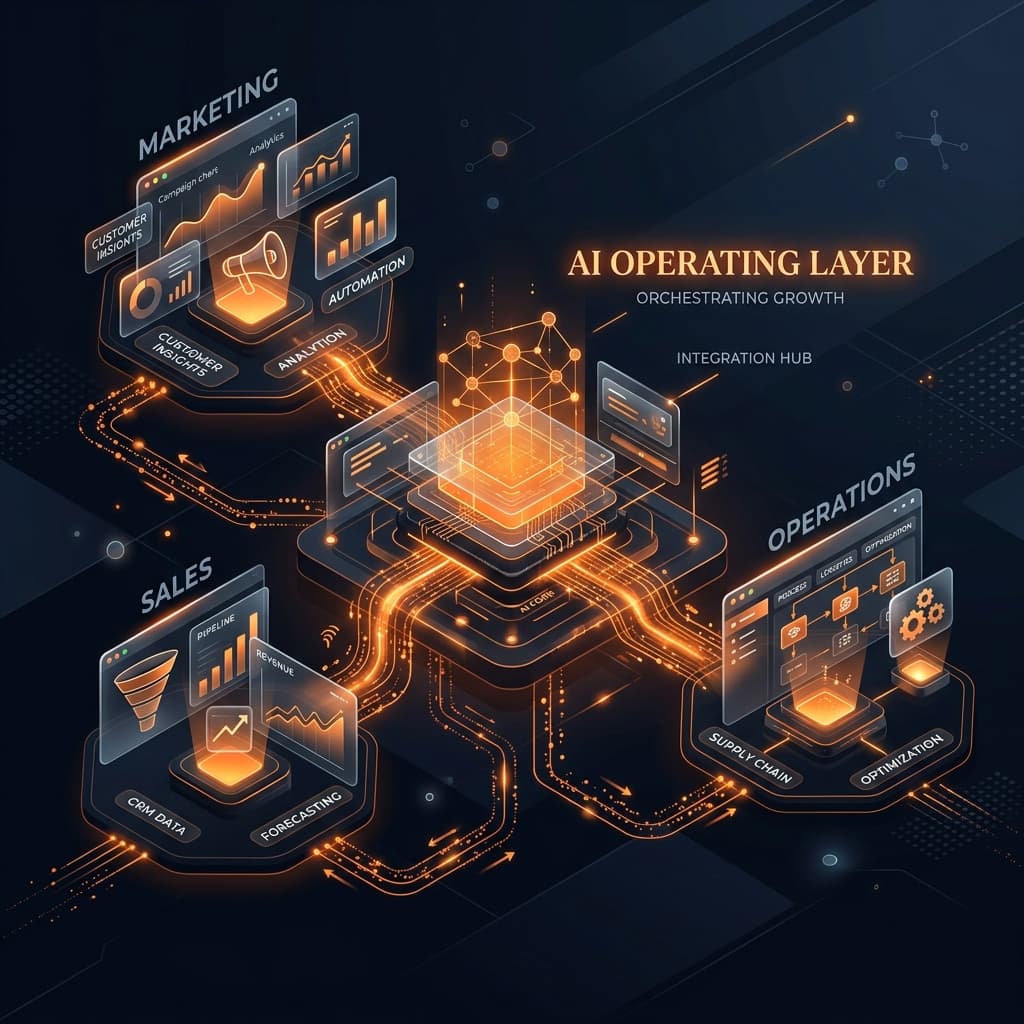
Successful digital transformation happens in three layers, and all three have to work together. The first is the AI systems layer — the automations, agents, and triggers that handle repetitive execution. The second is the integration layer — the connective tissue between your CRM, communication tools, ops platforms, and data sources. The third is the execution layer — the people and processes that run the system, measure outcomes, and continuously improve.
Most companies invest heavily in layer one (the tech) and ignore layers two and three. Zyene builds all three as a unified operating layer — which is why transformations delivered through a structured execution model tend to stick while point-solution rollouts tend to fade.
What transformation looks like in practice
For a marketing team, transformation might mean lead capture → CRM entry → automated follow-up sequence → weekly performance report all happening without manual intervention. For an operations team, it might mean service request → intake form → routing to the right team → status update to the client → closure confirmation — all tracked, all automated.
The common thread is that predictable, repeatable work stops requiring human attention. Your team focuses on judgment, relationships, and decisions that actually need them. That shift — from execution overhead to strategic output — is what digital transformation actually delivers when it works.
Want to apply this inside your stack? Talk to our team about workflows, integrations, and rollout.