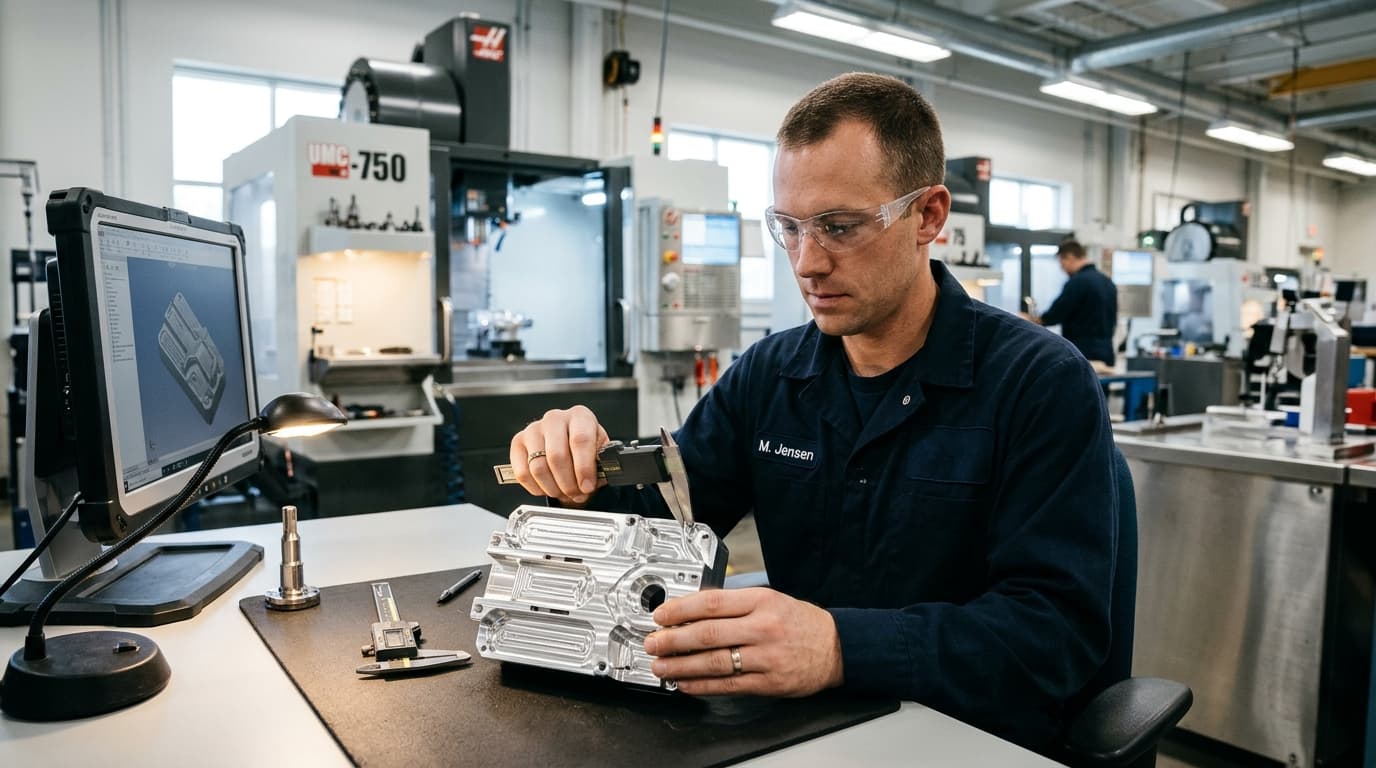
AI operations for Massachusetts manufacturers refers to specialized workflow software that automates back-office administrative bottlenecks — such as RFQ parsing, purchase order data entry, and customer status updates — while integrating directly with existing ERPs like Epicor, JobBOSS, Infor, and Global Shop Solutions. By handling document intake and preparation outside the core database, precision machine shops and contract fabricators can respond to bids 65% faster without adding administrative overhead.
Massachusetts has one of the most concentrated and sophisticated manufacturing economies in the country. From precision machined components in Worcester County to medical devices along Route 128 to aerospace sub-assemblies in the Pioneer Valley, the state's manufacturers compete on craft, tight tolerances, and reliability — not on cheap labor. They win on quality and on the deep technical relationships they build with engineering procurement teams at OEM customers.
Walk into almost any of those shops and the shop floor is immaculately organized: CNC machines are calibrated, CMM inspection is rigorous, and AS9100 or ISO 13485 quality records are current. Walk into the front office, however, and you will find a different picture. RFQs arrive as email attachments and sit in inboxes until an estimator has four free hours. Purchase orders come as PDFs and get rekeyed into the ERP by the order desk. Customer questions about delivery dates pull engineers off the floor. None of that friction is unique to Massachusetts, but it is the exact operational gap Zyene was built to close.
What does the back-office bottleneck cost a Massachusetts precision shop?
The cost of administrative drag in a precision machine shop is rarely captured in a single line item because it is dispersed across expensive technical personnel. An estimator who spends two hours per RFQ manually transcribing part dimensions from drawing prints into an Excel spreadsheet is an estimator who quotes 10 fewer jobs each month. In contract manufacturing, where 60% of bids are won by the first technically competent response, a four-day quoting backlog means losing revenue before ever calculating pricing.
Massachusetts manufacturers operate with deep technical expertise but lean administrative staff. When a master machinist or senior operations manager spends 15 hours every week answering order status emails and chasing paperwork, shop floor throughput suffers directly. The real cost is not clerical wages; it is the lost margin from high-value engineering judgment being consumed by repetitive data entry.
How does AI RFQ intake accelerate quoting for precision machine shops?
For precision CNC machine shops, sheet metal fabricators, and contract manufacturers in Massachusetts, the highest-leverage first workflow Zyene deploys is automated RFQ intake. When an engineering customer transmits a quote request, the packet typically contains 2D engineering drawings (PDFs), 3D CAD files (STEP/IGES), a Bill of Materials spreadsheet, customer-specific quality requirements, and delivery milestones. Reading that packet is not estimating — it is clerical preparation for estimating.
Zyene's RFQ workflow automatically parses the incoming email, scans drawing title blocks, extracts part numbers, revision levels, raw material specifications (e.g., 6061-T6 aluminum, 17-4 PH stainless, Inconel 718), surface finishes (anodize, passivation, plating), and tight GD&T tolerances. It cross-references your ERP database to retrieve historical jobs with similar geometries or materials.
The estimator receives a pre-assembled 'Estimator Package' highlighting critical features, material availability, and historical actual machining times. The estimator retains 100% control over setup hours, cycle time estimates, tooling selection, and margin. By automating document intake, shops double their weekly quoting capacity and shrink quote turnarounds from three business days to under four hours.
How does automated purchase order entry eliminate rekeying?
While Massachusetts manufacturers have electronic EDI connections with their largest defense or aerospace prime contractors, 70% of customer orders arrive through unstructured channels: emailed PDF purchase orders, Excel order forms, or plain email text. Each order forces the order desk to verify customer accounts, match customer part numbers against internal inventory SKUs, check contract pricing, and manually key thirty lines into the ERP.
Zyene's order automation engine reads unstructured purchase orders in any visual layout without relying on brittle OCR templates. The pipeline extracts line items, normalizes units of measure (e.g., converting cases to eaches), checks live inventory levels across branch warehouses, and stages verified sales orders directly in your ERP.
A human operator reviews the prepared transaction on a side-by-side verification screen where exceptions or pricing discrepancies are highlighted in high contrast. Routine repeat orders are approved in seconds, reducing keyboard entry by 80% and preventing downstream shipping or invoicing errors.
How does AI handle order status and customer delivery inquiries?
OEM customers in aerospace, medical devices, and robotics demand continuous delivery transparency. When an assembly line schedule is at risk, buyers flood manufacturer mailboxes with 'Where is my order?' inquiries. Each inquiry requires a customer service representative to search the ERP, inspect shop floor travelers, review freight carrier tracking, and compose an email reply.
Zyene's order status agent monitors support inboxes, extracts purchase order references, queries live ERP job status and carrier logistics APIs, and drafts accurate, professional status updates for one-click employee review. Inbound response times plummet from hours to minutes, keeping customers informed without pulling operations staff away from production.
How does Zyene integrate with on-premise and cloud ERP systems?
Massachusetts manufacturers run diverse ERP backbones — including Epicor (Kinetic, Vantage, Prophet 21), JobBOSS, Global Shop Solutions, Infor CloudSuite, and NetSuite. Zyene connects directly to your existing systems using secure REST/SOAP APIs, database staging tables, or scheduled file interfaces. We never require replacing your ERP.
Your ERP remains the authoritative system of record. Zyene functions as an external intelligence membrane that reads catalog masters and writes draft transactions under strict role-based access controls (RBAC) and managerial approval thresholds identical to human staff.
How can manufacturers start with a measured pilot workflow?
Every Zyene deployment begins with an AI Workflow Assessment focused on a single high-pain bottleneck — typically RFQ intake or purchase order entry. We map your existing process, document exception rules, and measure a precise empirical baseline (cycle time, manual touches, and error rates).
We build, backtest against historical shop data, and launch a production pilot within 30 days. Success is evaluated strictly against agreed operational metrics before expanding to subsequent workflows. If your Massachusetts shop wants to increase quoting throughput and eliminate office rekeying, contact Zyene to schedule an initial operational assessment.